
ENITEC – Energy-efficient processes for ceramic production
The ENITEC project aimed to reduce energy consumption in the production of technical ceramics by up to 40% through innovative furnace technologies and optimized processes.
Read more
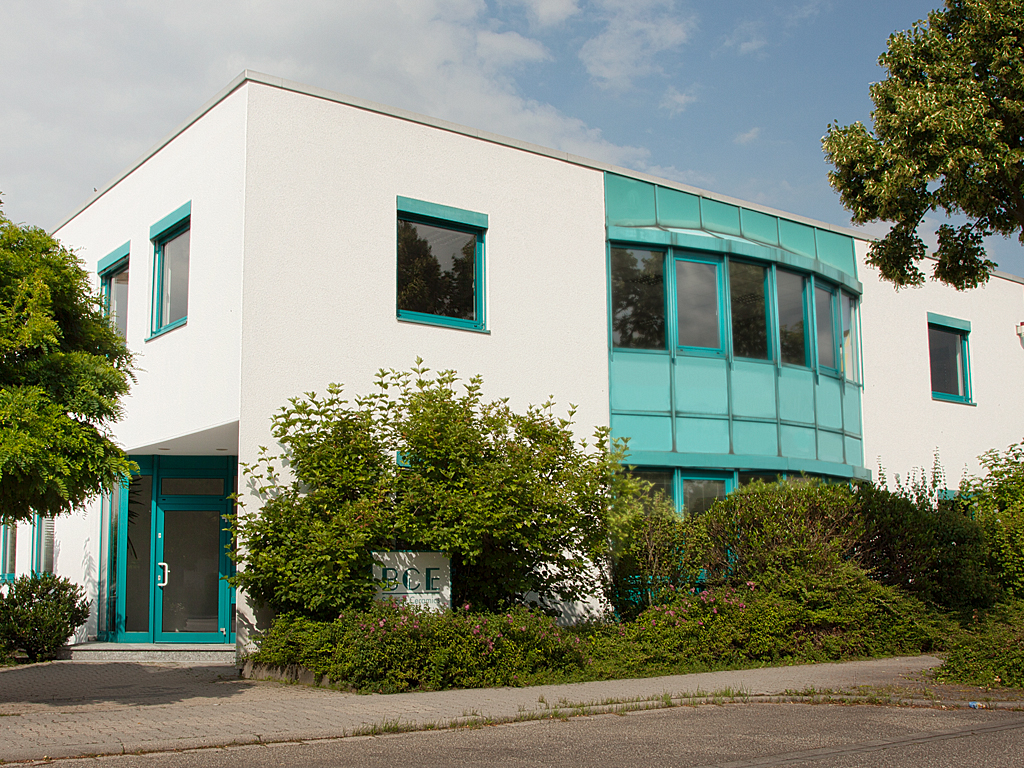
BCE Special Ceramics manufactures technical ceramic components for mechanical engineering, medical technology, chemical industry, renewable energies and electrical engineering. Work is carried out on a customer-specific basis from quantity 1, in oxide and non-oxide ceramics. Every project starts with the same question: which material will withstand the specific load profile? BCE clarifies this before quoting, not after.
Short communication channels and direct contacts instead of a sales chain. Those who enquire speak with people who can assess material and manufacturing, and know after the first conversation whether it is feasible.
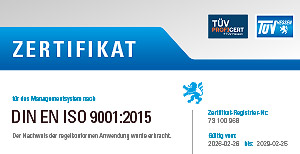
A consistent process from enquiry to delivery, regularly audited. For requirements from medical technology, BCE prepares ISO 13485 in a structured manner.
Manufacturing and metrology are in-house. This makes tolerances achievable that could not be maintained with standard processes, inspected at the same location where manufacturing takes place.
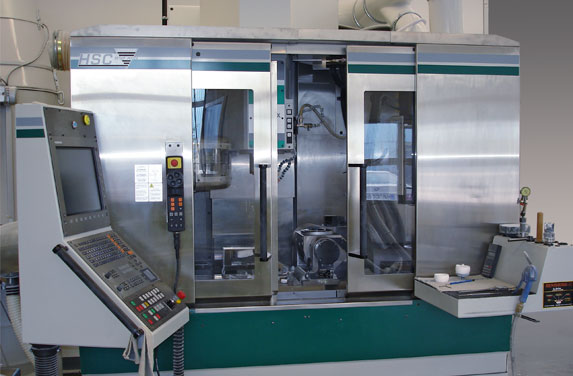
BCE covers the entire process chain at one location. Ceramic powders are cold isostatically pressed and then machined on ten CNC-controlled machines and several NC machines. From 5-axis machining centres to high-precision cylindrical grinding machines and ultrasound-assisted hard machining, as well as lapping and honing for the highest surface qualities, all essential processes are available in-house.
Oxide ceramics such as alumina and zirconia, their mixed oxides (ATZ and ZTA) and non-oxide ceramics such as silicon nitride are all processed. Which material is used depends on the load profile of the component.
On approximately 1,800 m² of production space, components with tolerances in the µm range are produced. Because manufacturing and measurement are in-house, material, geometry and inspection can be closely coordinated.
BCE was founded in 1986 in Mannheim by Hermann Bertsch. From the initial three-man operation, an owner-managed medium-sized company with around 30 employees has developed. In 1991, the company moved to its own building in the Friedrichsfeld district, and in 2005 a spatially separate department for medical technology was added. BCE has remained owner-managed and independent to this day, without any group affiliation, and supplies customers in Germany and abroad. The company is managed by Dr.-Ing. Torsten Weiß.
BCE develops ceramic materials in collaboration with research institutions and suppliers, and participates in publicly funded projects on novel ceramics in the ATZ/ZTA system.
The ENITEC project aimed to reduce energy consumption in the production of technical ceramics by up to 40% through innovative furnace technologies and optimized processes.
Read more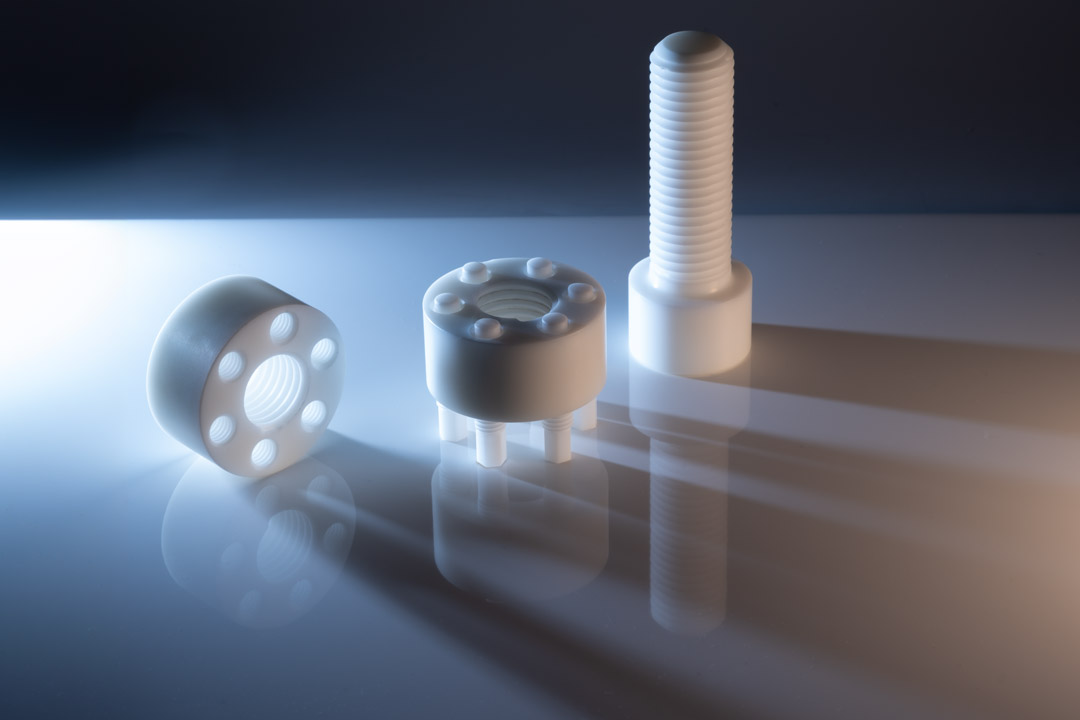
In a research project with the Fraunhofer Center HTL, a new zirconium oxide screw connection was created that can withstand extreme conditions. This new development combines high temperature and corrosion resistance with improved tensile strength thanks to special thread geometries.
Read more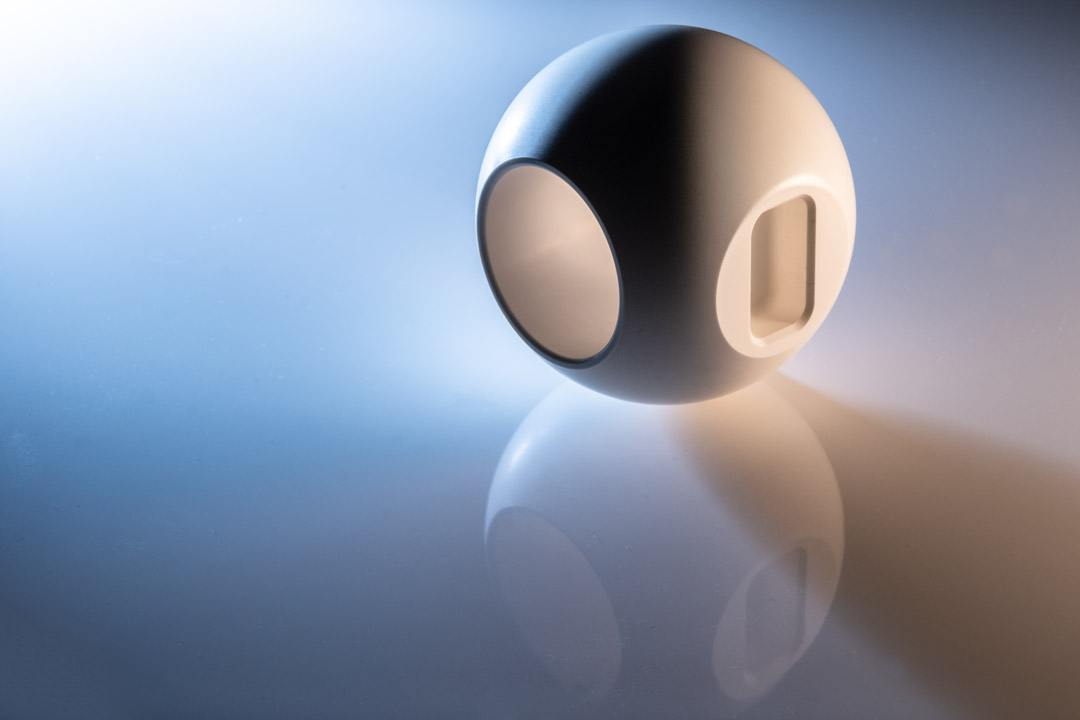
The InCoKer project aims to develop advanced ATZ/ZTA ceramics through the use of ICME. The aim is to optimize their mechanical properties, reduce development time and costs and make processes more sustainable.
Read moreBCE is a member of the Association of the Ceramic Industry (VKI). For work steps outside the company, BCE works with established partners: IPT-Albrecht for metal-ceramic joints and iso-tec for ceramic coatings.

BCE is a member of the VKI (Association of the Ceramic Industry)
www.keramverband.de

Partner for metal-ceramic joints
www.ipt-albrecht.de
Partner for ceramic coatings
www.iso-tec.de
The quickest way to find out is a conversation. We listen and tell you openly whether and how ceramics make sense.
Does BCE manufacture everything in-house or is production outsourced?
Entirely in-house. There is no outsourced series production that takes the result out of our hands. Pressing, CNC machining and final inspection are all carried out at one location, which eliminates interface losses between material, geometry and inspection, and responsibility for the component remains with BCE throughout.
Since when has BCE been ISO 9001 certified?
Since 2001, currently to ISO 9001:2015. Material, batch, inspection dimensions and manufacturing parameters are documented so that every component remains traceable. For regulated applications in medical technology, BCE prepares the requirements of ISO 13485 in a structured manner.
Who manages BCE, and is the company part of a group?
BCE was founded in 1986 by Hermann Bertsch and has remained owner-managed to this day. The company is managed by Dr.-Ing. Torsten Weiß. There is no group in the background: decisions on material, manufacturing route and delivery are made at the Mannheim site.
Does BCE support ceramic-appropriate component design?
Yes. A metal geometry can rarely be transferred to ceramics without modification. Before manufacturing, BCE checks where radii, wall thicknesses, transitions or tolerances should be adapted to the properties of the material, and coordinates geometry, material and manufacturing route together. This allows stress peaks and unnecessary machining costs to be avoided at an early stage.