Electrical insulation at high temperatures
Many insulating materials lose their properties as operating temperature increases.

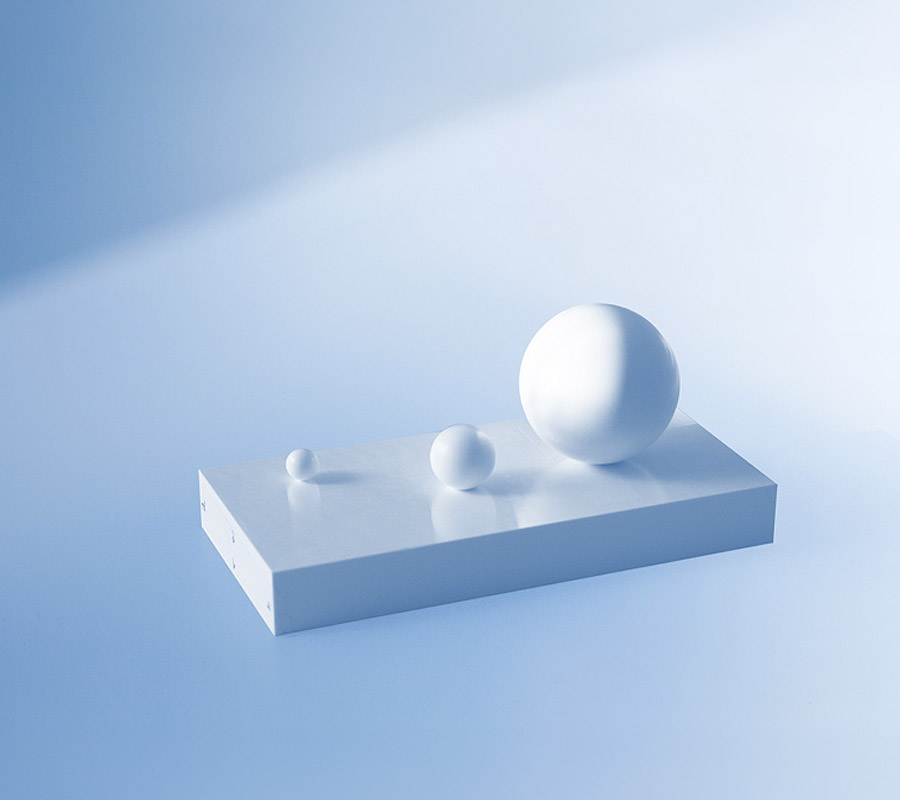
Oxide ceramic materials are used primarily as insulators in electrical engineering and measurement technology. Their high electrical resistance, combined with temperature resistance and mechanical strength, opens up a broad range of applications – from simple spacers to metallised sensor components.
View typical requirements
Insulation, dimensional stability, metallisability – the key requirements in electrical engineering and measurement technology.
Select material by application
Al₂O₃, AlN or ZrO₂ – decision guide based on electrical, thermal and mechanical requirements.
Discuss a specific component
Insulator, sensor carrier, feedthrough? We clarify feasibility in a direct conversation.
Many insulating materials lose their properties as operating temperature increases.
Differing coefficients of thermal expansion lead to dimensional deviations – critical in optical systems and tactile measurement technology.
Metallic materials interfere with electromagnetic measurement signals.
Insulators must remain reliable even under sustained load and thermal cycling.
Custom solutions for sensor and measurement technology are often required in small volumes.
Tell us the electrical and thermal operating conditions – we assess the material and feasibility.
Early consultation saves time, cost and iteration cycles.
approx. 1,800 HV
Hardness of Al₂O₃. Hardened steel is at 700–800 HV. Relevant for wear-resistant measuring table plates.
Tolerances in the µm range
Achievable for calibration bodies, push rods and sensor caps – matched to sintering tolerance and final precision.
Up to beyond 1,500 °C
Al₂O₃ as a standard insulator – stable even at elevated temperatures and in the presence of chemical agents.
From batch size 1
Manufacturing without minimum quantities – prototypes in the same process as series parts.
ISO 9001
Certified process – full documentation available on request.
Answers to typical questions on electrical insulation, dimensional stability and the feasibility of ceramic components.
Which material is best suited for electrical insulation at high temperatures?
Al₂O₃ is the standard insulating material: cost-effective, readily available and stable up to beyond 1,500 °C. For applications that require high thermal conductivity alongside electrical insulation, AlN is the right choice. The material selection depends on the electrical, thermal and mechanical requirements in operation.
What must be considered for components that are to be metallised?
Al₂O₃ can be provided with electrically conductive structures by sintering in platinum wires or by metallisation with silver-platinum pastes. This is relevant for sensor components and capacitive elements used in distance measurement. Metallisability must be taken into account in the geometry and material selection from the outset.
How precisely can BCE manufacture ceramic components for measurement technology?
Tolerances in the µm range are achievable for measurement technology components – for measuring table plates, calibration bodies, push rods for tactile measuring systems and sensor caps for eddy current measurement technology. The key is coordinating sintering tolerance with the required final precision. We clarify this before the quote.
Which ceramic components does BCE manufacture for electrical engineering and measurement technology?
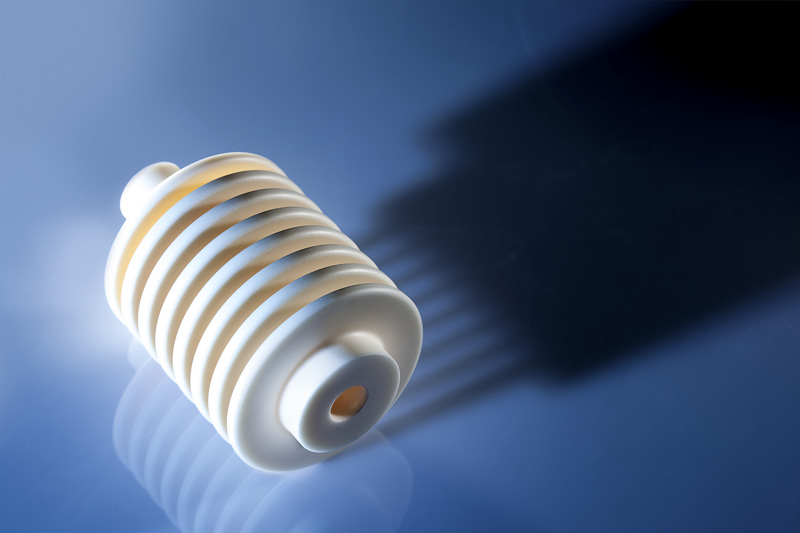
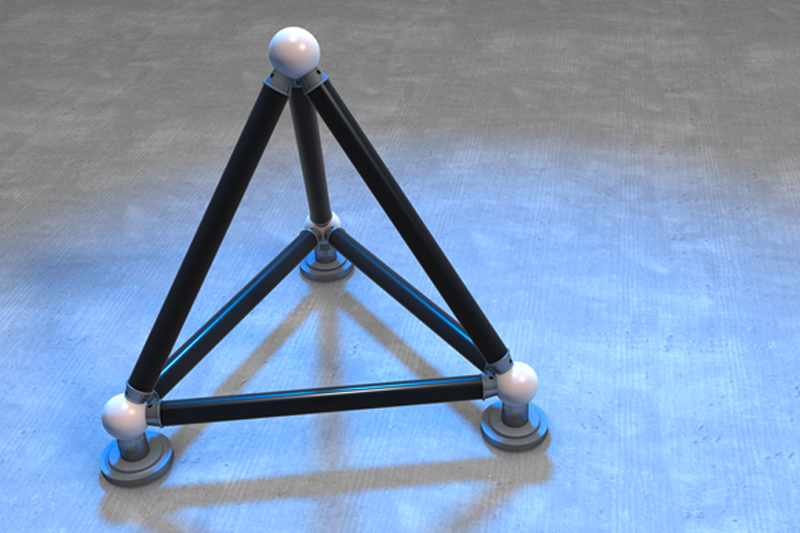
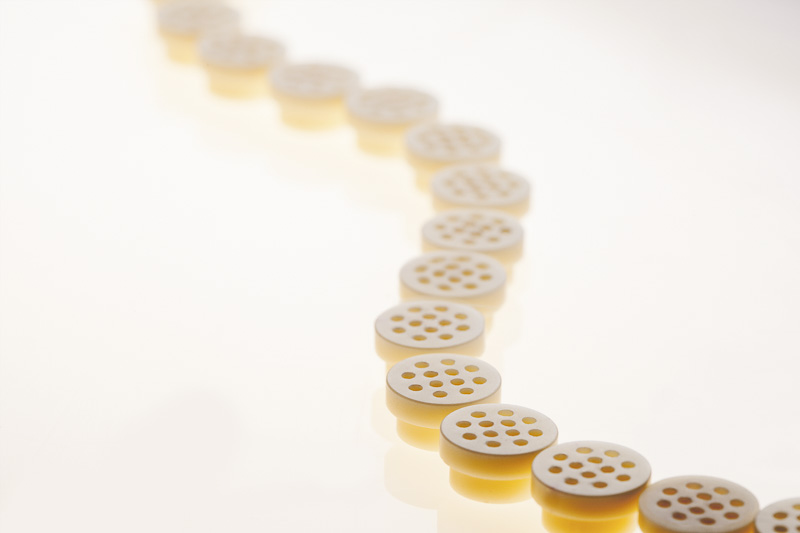
Insulating components such as coil formers and laser components, sensor heads, spacers, feedthroughs, multi-bore tubes, sleeves, measuring table plates, push rods for tactile measuring systems, metallised sensor components, calibration bodies for optical measuring systems, housings for optoelectronics, optical benches and components for UHV systems. All components manufactured to customer drawings.
How reliable are ceramic insulators in continuous operation?
The decisive factor is the probability of failure under the specific load profile. When electrical, thermal and mechanical requirements are carefully matched to one another, a very low failure rate is achieved. Failures almost always result from incorrect material selection or from underestimating the thermal operating conditions.
Briefly describe the requirement and we will provide an assessment of the material and feasibility.