Hydrogen embrittlement and gas tightness
Components must remain tight in hydrogen atmospheres and must not fail due to embrittlement.


Fuel cells, solar thermal systems and wind power system technology place highly diverse loads on components: hydrogen atmosphere, molten salts above 500 °C, alternating loads and electrical insulation. Metallic and polymer materials reach their limits here. BCE manufactures ceramic components for all three areas — from material selection through to the finished geometry.
Fuel Cells and Hydrogen Technology
Stack plates, insulators and sealing surfaces in hydrogen atmospheres.
Solar Thermal Energy and High-Temperature Absorbers
Thermally and electrically insulating components at molten-salt temperatures.
Wind Power and System Technology
Ceramic materials for requirements in the drivetrain and power electronics.
Components must remain tight in hydrogen atmospheres and must not fail due to embrittlement.
In stacks, absorbers and inverters, insulation, temperature and mechanical loads come together.
Solar thermal components operate permanently at high temperatures and must reduce interfaces.
Thermal cycling and cyclic loads must already be considered during material and geometry selection.
High mechanical preload and precise fits require ceramic-compatible design.
Tell us the medium, operating temperature, preload and required insulation values. We will evaluate material, geometry and feasibility.
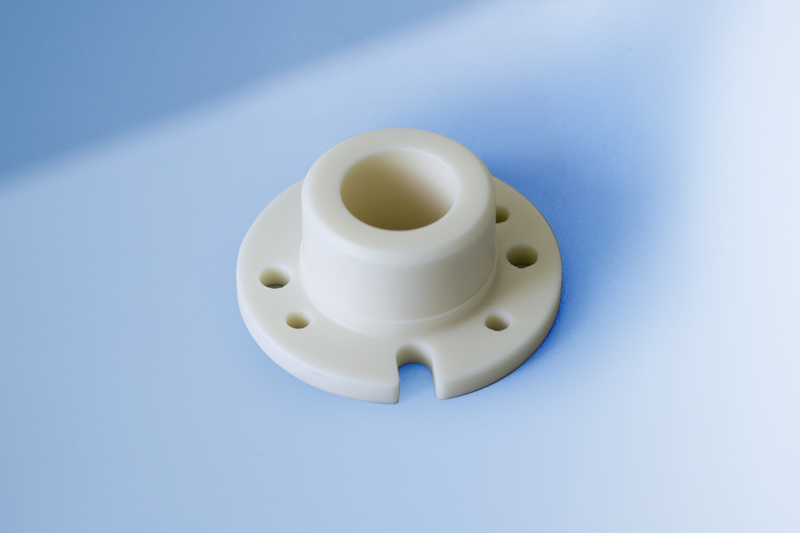
In fuel cell stacks, four requirements come together at the same time: electrical insulation between the cells, uniform pressure transfer across the stack surface, gas tightness and resistance in a pure hydrogen atmosphere. Many metallic materials are susceptible to hydrogen embrittlement — a form of material fatigue that leads to cracking and premature failure.
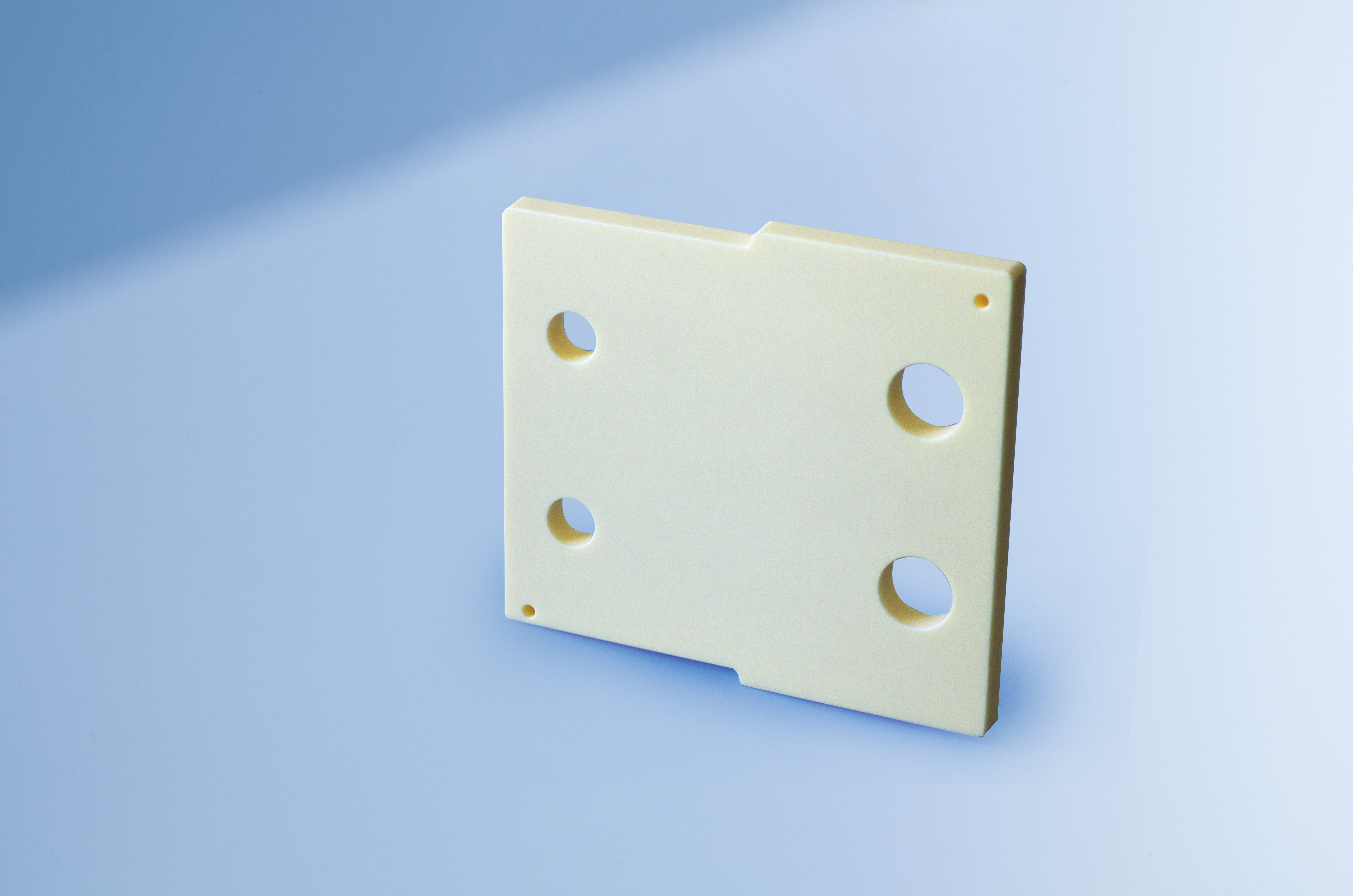
Components made from Al₂O₃ A-997 (99.7% purity) and A-999 have proven themselves for years as stack plates. They withstand temperatures above 1,600 °C in pure hydrogen atmospheres and transfer stack preload evenly. With 0% open porosity and dielectric strength above 25 kV/mm, gas tightness and electrical insulation are verified by measurement.
Blanks are isostatically pressed at 2,000 bar, machined to geometry using CAD/CAM and 5-axis machining, and finished by grinding.

In parabolic trough solar power plants, absorber tubes operate with molten salts as the energy carrier. Nitrate salts have a melting temperature of around 400 °C and are operated permanently at 500 to 600 °C. In the focal line area, components must provide both thermal and electrical insulation — a material that is merely temperature-resistant is not sufficient.
BCE uses ZrO₂ in quality Z-513 for this application. With a thermal conductivity of 2 W/mK (steel: 50 W/mK) and thermal shock resistance of 275 K, the material performs two functions in a single component — thermal and electrical insulation of the absorber tubes.
This reduces the number of components and interfaces in the critical focal line area.
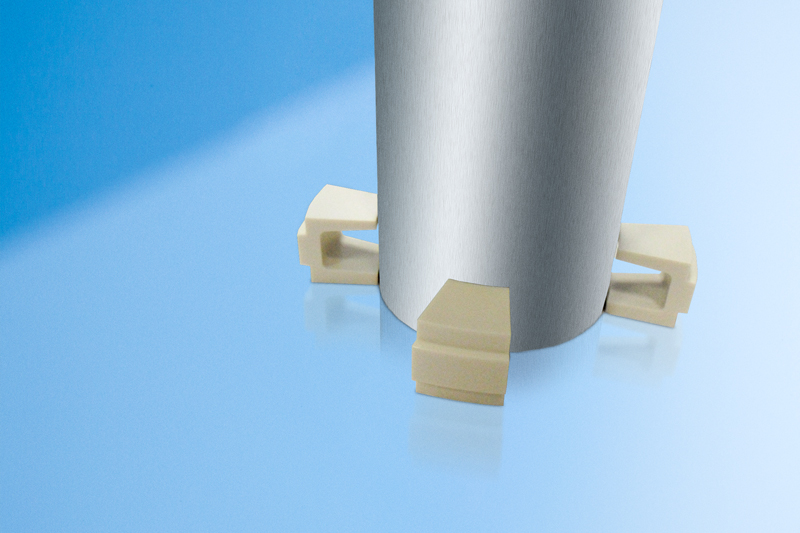
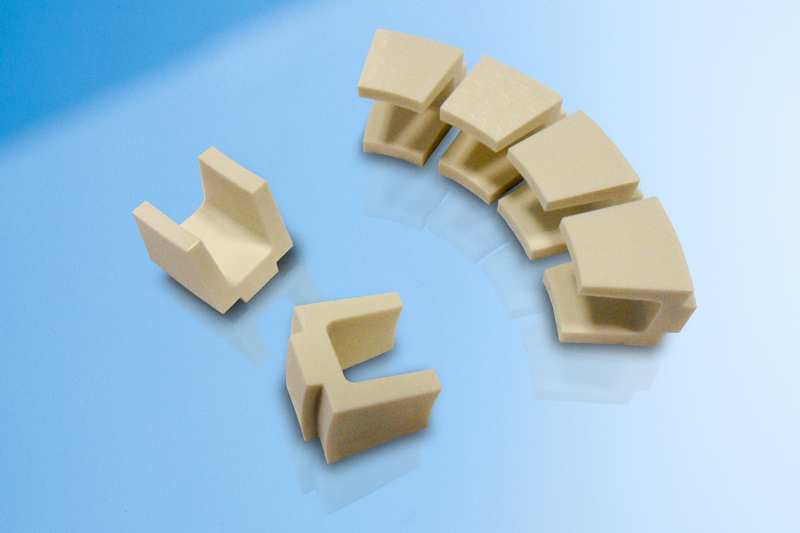
Modern wind power in its current form would not be possible without ceramic hybrid bearings. Rolling elements made from Si₃N₄ in main bearings are a specialized segment served by only a few manufacturers. In addition, other requirements for ceramic materials arise in wind turbine system technology: electrical insulation, dimensional stability under alternating loads and tightness. If you are designing ceramic components for wind power system technology, talk to us.
Those who evaluate alternating load, medium and preload together at an early stage avoid expensive material replacement after the first field phase.
>1,600 °C
Dimensionally stable in pure hydrogen atmospheres – application range of A-997/A-999 in fuel cell stacks.
0%
Open porosity for A-997 – measurable basis for gas-tight components in the stack.
2,000 bar
Isostatic pressing pressure of the blanks – homogeneous density as the starting basis.
>25 kV/mm
Dielectric strength of A-997 – electrical insulation in stacks and inverters.
2 W/mK
Thermal conductivity of Z-513 (steel: 50 W/mK) – thermal insulation in solar thermal energy.
Describe the medium, temperature and load — we will provide an initial technical assessment.
Answers to typical questions about inquiries, prototypes, documentation and the feasibility of ceramic components in renewable energy systems.
How does an inquiry for BCE energy technology components work?
You describe your application case – ideally with a drawing, specification sheet or at least the central requirements: medium, temperature, preload and required insulation values. We will respond with a feasibility assessment including material recommendation and possible risks. Only once this basis is in place will a quotation be prepared.
Does BCE manufacture prototypes and individual parts for renewable energy applications?
Yes. Especially in fuel cell and solar thermal development, prototype and small-batch capability is crucial: new stack designs or absorber geometries must be tested before series production makes sense. BCE Special Ceramics manufactures custom-made components from quantity 1, with no minimum quantities and without high tooling costs. Prototypes go through the same quality process as series parts.
What documentation does BCE provide?
BCE is certified according to ISO 9001. If your project has requirements for documentation, traceability or test reports, we will agree the scope before production starts.
How does BCE assess the reliability of ceramic components under alternating load?
We do not speak in terms of general service life, but in terms of probability of failure under the specific load profile. This means: alternating load cycles, medium, thermal cycling and preload are included in material and geometry selection. Blanket statements about durability would not be technically sound – which is why we clarify the load case before manufacturing.
How do I know whether ceramic is useful for my application at all?
Describe the operating conditions: medium, temperature, type of load and required insulation values. BCE will assess whether ceramic offers a verifiable advantage over a metallic or polymer material. If not, we will say so. Ceramic makes sense where conventional materials reach their limits — not before.
We will tell you whether ceramic is the right choice – and if so, which material.