Wear from abrasive media
Wear from abrasive media and minimal lubrication leads to premature component failure.

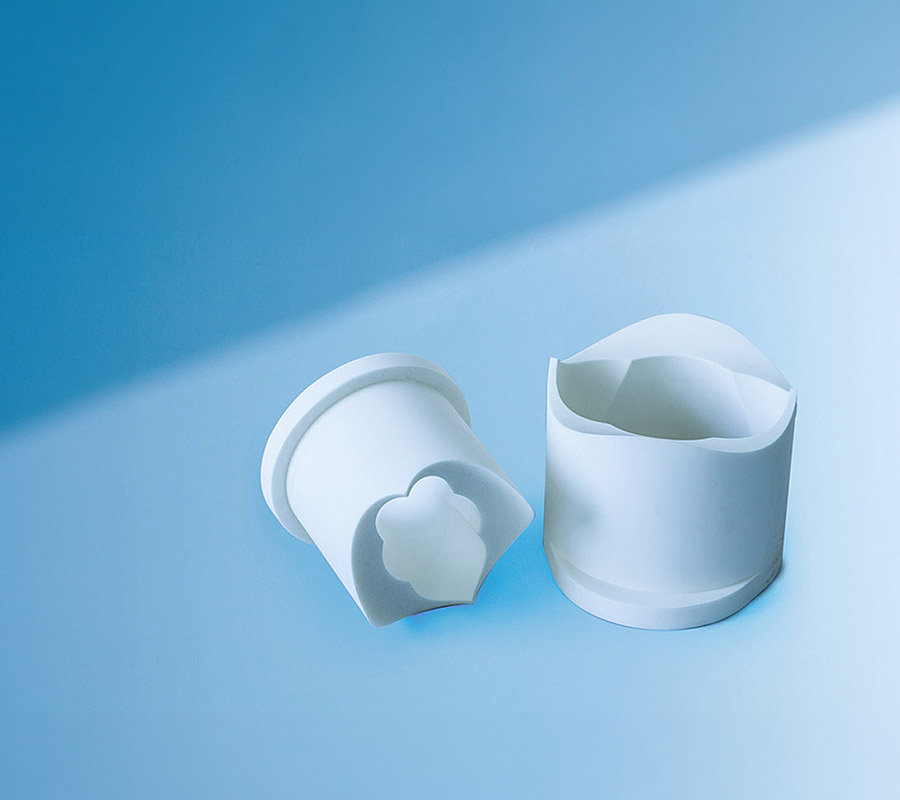
Mechanical and plant engineering places diverse demands on ceramic components. In addition to high mechanical load capacity, wear resistance, thermal or electrical insulation, and thermal conductivity come into play – often in combination.
View typical requirements
Wear, corrosion, high-temperature operation: the most common causes of component failure in mechanical and plant engineering.
Select material by application
Al₂O₃, ZrO₂ or SiC: decision guide based on wear profile, temperature and medium.
Discuss a specific component
Bearing sleeve, valve component, nozzle? We review feasibility and the optimal solution approach.
Wear from abrasive media and minimal lubrication leads to premature component failure.
Bearing failure at high temperatures or in corrosive environments – standard materials reach their limits.
Material failure under combined thermal and mechanical load is difficult to predict.
Corrosion from aggressive media, chemicals and adhesives permanently destroys metallic components.
Precision components in small quantities without high tooling costs – economically feasible.
Tell us your operating conditions and the type of load. We will identify the optimal solution for your application.
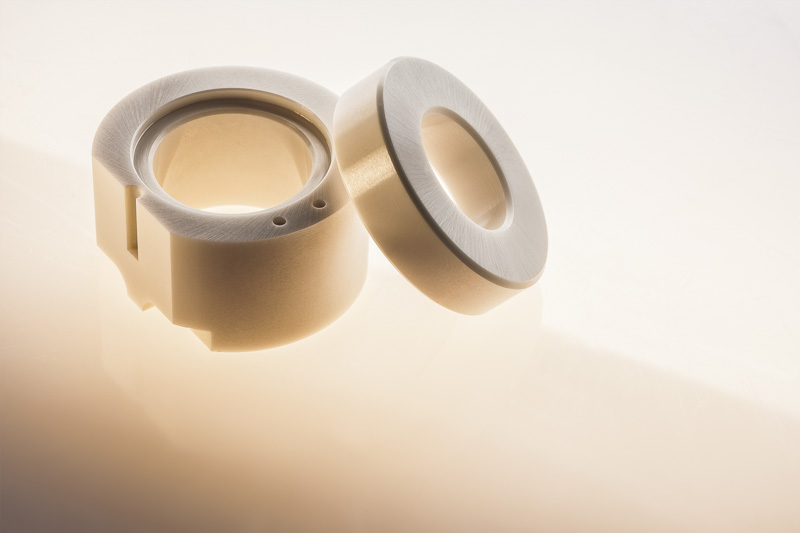

Early consultation on suitable material pairing and installation situation reduces premature failure.
approx. 1,800 HV
Hardness Al₂O₃. Hardened steel is at 700–800 HV. Decisive for wear protection in continuous operation.
>900 MPa
Flexural strength ZrO₂. For bearings and valve components under peak mechanical load.
approx. 3.9 g/cm³
Density Al₂O₃. Compared to steel at approx. 7.8 g/cm³. Relevant for moving components.
Media lubrication
Ceramic plain bearings run in water, oil or aggressive media without grease lubrication.
up to 1,750 °C
Operating temperature oxide ceramics. Where standard bearings fail due to heat.
Answers to typical questions on material selection, metal replacement, material pairing and operating conditions for ceramic components.
Why can't I simply have an existing metal component manufactured in ceramics?
In most cases, a 1:1 transfer is not expedient. Ceramics react differently to tensile stress, edge pressure and impact loads compared to metal. What works in steel can become a point of early fracture in ceramics. We jointly assess whether the existing geometry is ceramic-appropriate – or whether an adapted solution makes more sense.
Which material is suitable for bearings under high temperature or with minimal lubrication?
Al₂O₃ and ZrO₂ are suitable for plain bearings with media lubrication – they run in water, oil or aggressive media without grease lubrication. At very high temperatures combined with mechanical load, Si₃N₄ is the first choice. The material selection depends on temperature, medium and load type – we clarify this before the quote.
What needs to be considered for material pairing?
Ceramic on ceramic or ceramic on metal requires matched pairing partners. An incorrect pairing leads to increased wear or premature failure. We take material pairing and the installation situation into account from the very beginning.
Which ceramic components does BCE manufacture for mechanical and plant engineering?
Wear-resistant bearing sleeves, plain bearings with media lubrication, valve components such as seat rings, cones and ball valves, guide elements, nozzles for aggressive media and adhesives, cutting elements, shear blades, rotary shear blades, welding rolls, forming tools and high-temperature-resistant electrical insulation components. All components manufactured to customer drawing.
How reliable are ceramic components in continuous mechanical engineering operation?
The key factor is the probability of failure under the specific load profile. Those who carefully match wear profile, temperature, medium, material pairing and installation situation achieve a very low failure rate. Errors almost always arise from incorrect material selection or an installation situation that was not designed for ceramics.
We will tell you which material will work reliably for your load situation – and which geometry makes sense.